
IB Physics Theme B: The Particulate Nature of Matter – Revision Guide
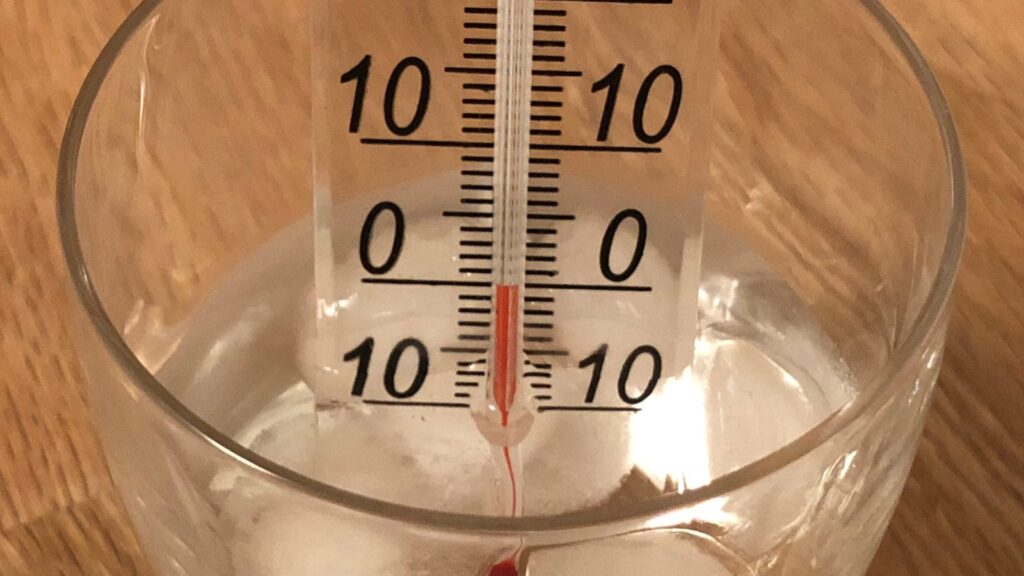
Theme B, The particulate nature of matter, explains the physics of heat, gases and electric circuits using the idea that matter is made of particles. It links everyday observations, why metals feel cold, why tyres heat up, why bulbs dim, to models of particles and energy. This guide sets out the topics, common pitfalls and how to revise them for the current IB Physics course.
What Theme B covers
| Topic | Level | Key ideas |
|---|---|---|
| B.1 Thermal energy transfers | SL and HL | Temperature and internal energy, specific heat capacity, specific latent heat, conduction, convection and radiation |
| B.2 Greenhouse effect | SL and HL | Black-body radiation, emissivity, albedo, the energy balance of the Earth |
| B.3 Gas laws | SL and HL | Pressure, the ideal gas law, kinetic theory, assumptions of the ideal gas model |
| B.4 Thermodynamics | HL only | First and second laws, entropy, heat engines and cycles |
| B.5 Current and circuits | SL and HL | Current, potential difference, resistance, resistivity, series and parallel circuits, internal resistance, power |
 Thermal energy: temperature is not heat
Temperature relates to the average kinetic energy of particles; internal energy is the total kinetic and potential energy of the particles. During a change of state, energy is transferred but the temperature stays constant, because the energy changes the potential energy of the particles. Use Q = mcΔT for heating and Q = mL for changes of state, and be careful with units (J kg⁻¹ K⁻¹ and J kg⁻¹).
The greenhouse effect: a modelling topic
Expect questions that apply the Stefan–Boltzmann law, Wien’s displacement law and emissivity to simple models of the Earth. Draw energy flow diagrams and keep track of what fraction of radiation is reflected (albedo) and absorbed.
Gas laws and kinetic theory
- Always convert temperature to kelvin.
- Use pV = nRT or pV = NkT depending on whether you have moles or molecules.
- Know the assumptions of the ideal gas model and when real gases deviate.
- Link macroscopic pressure to molecular collisions with the container walls.
Circuits: the most calculation-heavy topic
Circuit questions reward method. Redraw complex circuits, label currents, then apply Kirchhoff’s laws: current is conserved at junctions, and the sum of potential differences around a loop equals the emf. Practise potential dividers, internal resistance and the I–V characteristics of ohmic and non-ohmic components.
HL: thermodynamics
Apply the first law, Q = ΔU + W, with consistent sign conventions, interpret p–V diagrams (the area enclosed by a cycle is the net work done), and explain entropy and the second law in terms of the direction of natural processes. Heat engine efficiency questions are common.
How to revise Theme B
- Make an equation sheet linked to the data booklet, with units for every quantity.
- Practise unit conversions and kelvin conversions until they are automatic.
- Do mixed circuit problems weekly; they are reliable marks with practice.
- Use past papers for the current syllabus and mark them strictly.
IB Physics theme guides: A: Space, time and motion · B: The particulate nature of matter · C: Waves · D: Fields · E: Nuclear and quantum physics
Frequently asked questions
Are electric circuits part of Theme B?
Yes. In the current syllabus, current and circuits is topic B.5.
Is thermodynamics on the SL syllabus?
No. B.4 thermodynamics is HL only.
Why must temperatures be in kelvin for gas laws?
The gas laws use absolute temperature, which is proportional to the average kinetic energy of the particles.
Turn this into a 7 in IB Physics
- 200+ IB tutors & examiners
- Lessons in your time zone
- Free consultation first